
Public Comment Open Until April 21
The Government of Canada is proposing amendments to the Marine Mammal Regulations that would increase protection for endangered Southern Resident Killer Whales (SRKW).
This is a necessary and long-overdue step, and it should be implemented without delay.
At the same time, this is not the end of the work. Additional measures will be needed to fully protect whales and the ecosystems they depend on.
The public comment period closes April 21, 2026, at 11:59 pm EDT. 7:59 pm PST
Read the proposal and submit your comments here: https://gazette.gc.ca/rp-pr/p1/2026/2026-03-07/html/reg2-eng.html
*Scroll to the bottom of the Gazette page to submit your input.
*Copy/pasteable comments can be found at the bottom of this post.
Why This Matters
Southern Resident Killer Whales are one of the most endangered marine mammal populations in the world, with fewer than 75 individuals remaining.
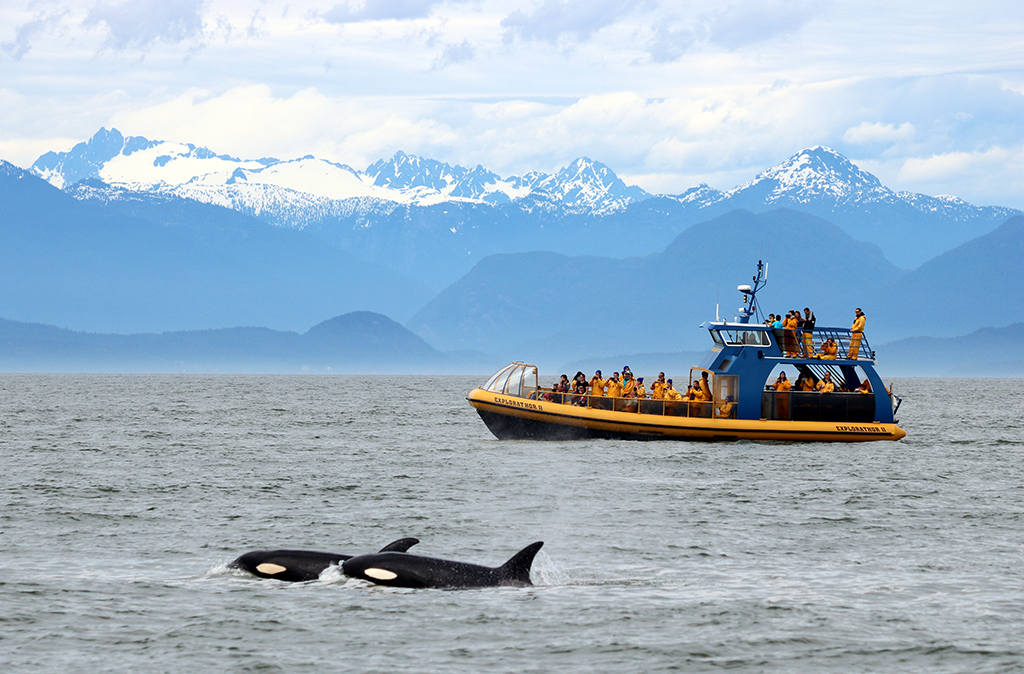
The federal government has identified imminent threats to survival, including reduced prey availability, contaminants, and—critically—physical and acoustic disturbances from vessels.
Killer whales rely on echolocation to hunt, communicate, and navigate. Vessel noise and proximity interfere with these essential life processes, reducing their ability to find food, especially Chinook salmon.
Reducing disturbance is one of the most immediate and actionable ways to support their recovery.
What the proposed amendments would do
- Increase the minimum approach distance to 1,000 metres for Southern Resident Killer Whales
- Maintain a 200-metre distance for other killer whale populations
- Apply the 1,000 m distance year-round across all Pacific Canadian fisheries waters
- Replace temporary Transport Canada interim Orders under the Shipping Act with permanent DFO regulations
- Apply to all vessels, including motorized and non-motorized watercraft such as kayaks and paddleboards.
This change would bring Canada in line with Washington State’s 1,000-yard (~914 m) rule and reflect the best available science on disturbance impacts.
Why This Is the Right Step Now
There is strong scientific evidence that vessel disturbance affects SRKW at distances well beyond current limits. Research since 2018 shows impacts extending beyond 400 metres, supporting a larger buffer.
Moving this measure into regulation provides long-term certainty and enforceability, reduces reliance on temporary measures, and improves clarity for boaters, industry, and enforcement.
This is a clear and necessary action to reduce one of the most immediate threats to an endangered population.
Making It Work in Practice
A regulation is only as effective as its implementation.
A distance of 1,000 m, roughly 10 football fields, is difficult to judge on open water.
Even well-intentioned boaters may unintentionally come too close.
To ensure this measure is effective, the federal government must pair it with strong boater education and outreach, clear guidance on what 1,000 m looks like in practice, adequate on-the-water enforcement capacity, and expanded use of tools like AIS tracking and whale alert systems.
Without this, even a well-designed regulation risks falling short in practice.
What Must Come Next
This proposal appropriately focuses on Southern Resident Killer Whales, given their endangered status. However, it must be understood as a first step, not the final solution.
Key next steps must include:
- Protections for other whale species and populations: Other killer whales and cetaceans remain subject to a 200 m distance, which may not adequately reduce disturbance. A parallel regulatory process is needed.
- Addressing vessel impacts beyond small boats: The proposed approach distance does not apply to vessels in transit or stationary vessels. While exempt, these vessels still contribute significantly to underwater noise. Measures to improve whale detection, notification, and avoidance must be strengthened.
- Modernizing whale watching management: A formal licensing framework could better manage vessel numbers, behaviour, and cumulative impacts across all cetacean species.
- Strengthening avoidance behaviour: Clearer language and public education—emphasizing avoidance, not just approach distance—would improve compliance and protection outcomes.
These measures should proceed in parallel, without delaying the adoption of the 1,000 m rule.
Take Action
Public input will help shape the final regulation.
We encourage you to support the adoption of the 1,000 m approach distance for SRKW, call for strong education and enforcement to make it effective, and advocate for next-phase protections for all whale species.
Read the proposal and submit your comments before Tuesday, April 21, 2026, at 11:59 pm EDT. 7:59 pm PST
Read the proposal and submit your comments here:
https://gazette.gc.ca/rp-pr/p1/2026/2026-03-07/html/reg2-eng.html
Protecting Southern Resident Killer Whales means reducing cumulative impacts across the ecosystem.
This is a critical step forward. Let’s make sure it is implemented well—and that the additional actions needed to secure their future are followed.
Comments you can feel free to use or adapt
- I support the proposed 1,000 metre approach distance for Southern Resident Killer Whales. This is a necessary and long-overdue measure that should be implemented without delay.
- With fewer than 75 individuals remaining, reducing vessel-related disturbance is essential to the survival and recovery of this endangered population.
- The 1,000-metre distance is supported by scientific evidence showing that vessel noise and proximity affect whales at much greater distances than current limits allow.
- Effective implementation will require strong public education, clear guidance, and consistent enforcement to ensure compliance.
- The exemption for vessels in transit leaves a significant gap. Large vessels contribute to underwater noise and disturbance and must be addressed through additional measures.
This amendment should be followed by stronger protections for all whale species, as the current 200 metre distance may not be sufficient.