
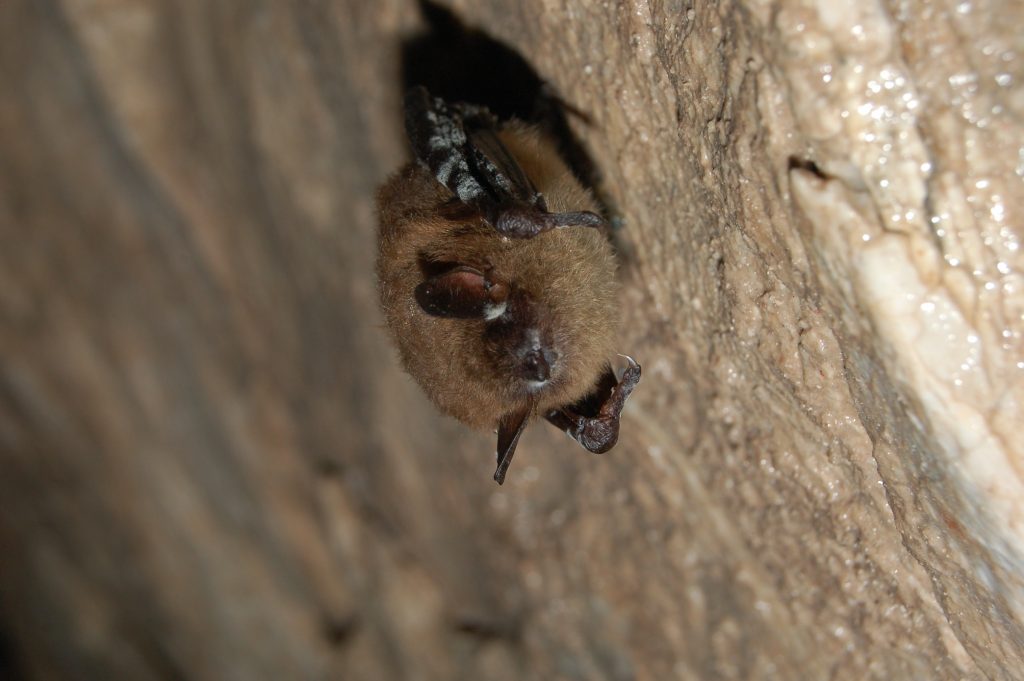
The Sunshine Coast Wildlife Project recently received the sad news that the fungus that causes White-Nose Syndrome (WNS) has been detected in Metro Vancouver.
What is White Nose Syndrome?
First introduced to North America in New York State in 2006, the fungus has now spread to 40 US states and nine Canadian provinces. East of the Rocky Mountains, WNS has had devastating impacts, killing millions of bats and leading to the emergency listing of three Canadian bat species as endangered.
Because bats play vital roles in local ecosystems as consumers of night-flying insects, their loss can cause significant ecological and economic harm.
The fungus that causes White-Nose Syndrome is harmless to humans but deadly to bats. It grows on the nose, ears, and wings of bats during their winter hibernation. When bats wake up more frequently to clean the fungus, they deplete their vital winter energy stores and often starve to death. Those bats that survive often suffer severe wing damage, dehydration, and an inability to regulate body temperature, and may die early in the spring.
What You Can Do
In the face of this deadly disease, one way to help local bats is to report any dead bats you find from now until May 31. This will help us determine if WNS is present on the Sunshine Coast and help track its spread.
The Wildlife Project keeps records of all dead bats and will pick up carcasses for testing to determine if the fungus is present.
Please note that because bats groom the fungus off themselves, there may be no observable white on the faces of infected bats.
Another way to help bats is to help keep populations healthy and strong, so they have a higher chance of surviving once the disease hits our region. One way to do this is to protect their roost sites. As natural roosting habitat in large, old trees has become more rare, several bat species have adapted to live in human structures, like roofs, attics, eaves, siding of homes, barns, sheds or woodshops, or in manmade bat boxes.
Two local bat species most vulnerable to White-Nose Syndrome, Little Brown Myotis and Yuma Myotis, commonly roost in buildings. The Wildlife Project can provide resources about coexisting with bats in buildings or guidance on best practices for safe exclusion, if desired.
Remember to never touch a bat with your bare hands. If there has been known or suspected direct human contact with a bat, please seek medical attention right away by contacting Sechelt Public Health or visiting the emergency room. If your pet has had direct contact with a bat, please contact your vet.
To report a dead bat or a known bat roost, please contact Michelle and Dave at coastwildlife@gmail.com or 604-989-1007.
For more information about bats, please visit bcbats.ca.