
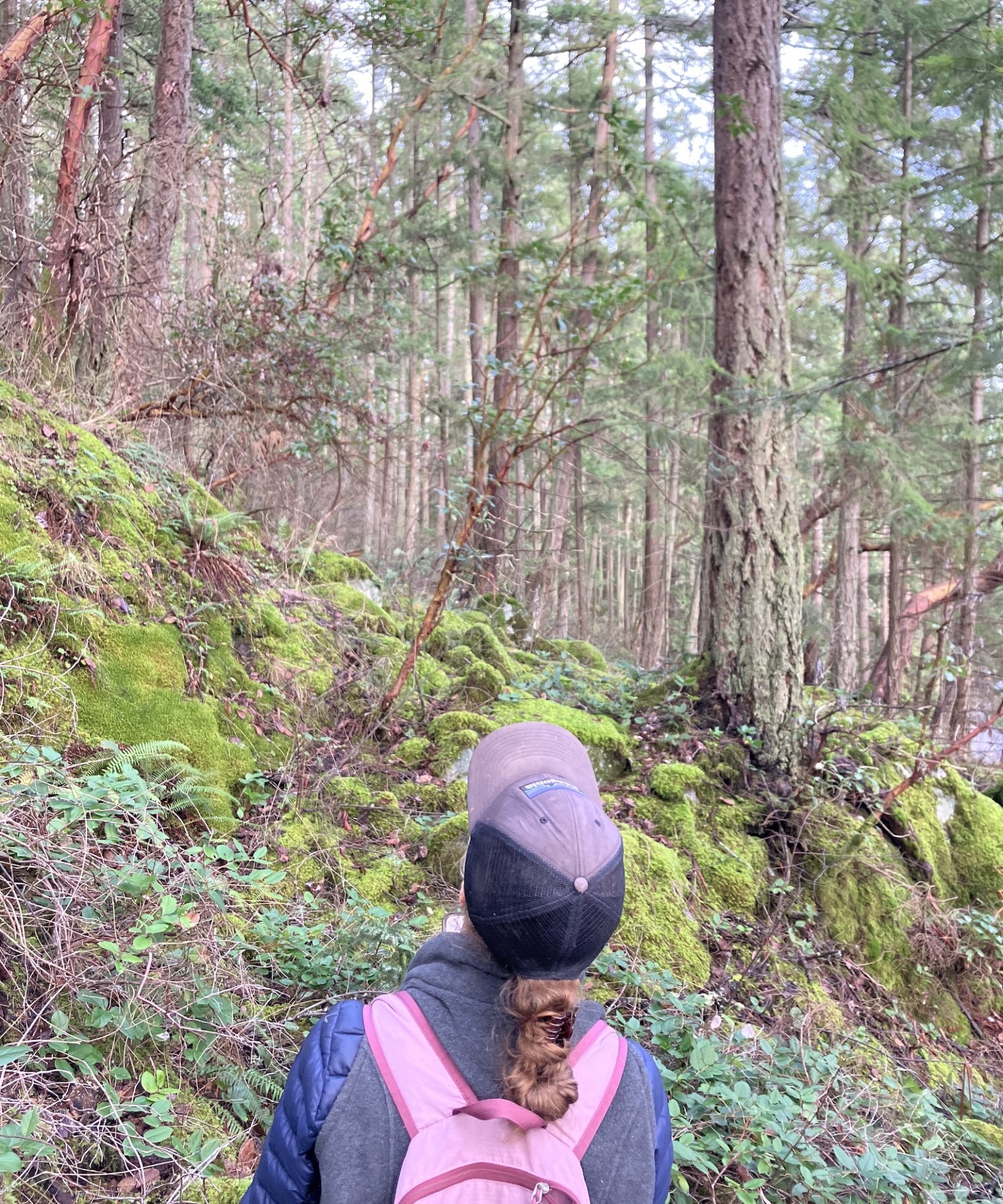
For more than three decades, community members on the Sunshine Coast have advocated for protecting Gospel Rock—the last intact stretch of natural waterfront in the Town of Gibsons and an extraordinarily beautiful rocky bluff, forest, and shoreline cherished by many. In 2022, community efforts culminated in the permanent protection of 6.72 hectares of ecologically sensitive land through the establishment of a conservation covenant.
This protection was a major achievement, but it was not the end of the story. A conservation covenant is only as strong as the care it receives over time. Ongoing monitoring, stewardship, and community awareness are essential to protecting the ecological values of Gospel Rock into the future.
The SCCA is working to re-ignite community stewardship at Gospel Rock, with opportunities coming up to get involved in hands-on care that helps protect this special place for future generations. If you are interested, please contact Hannah Ack by email at campaigns@thescca.ca
Conservation Covenants and the SCCA’s Role
A conservation covenant is a legally binding agreement attached to a property’s title. It sets out specific commitments by a private landowner to protect ecological and/or cultural values on the land, regardless of who owns it in the future. Qualified conservation organizations are responsible for monitoring the protected areas and ensuring the covenant objectives are upheld over time.
The SCCA became a Land Trust Organization (LTO) eligible to hold conservation covenants in 2008. Since then, we’ve worked to help secure and steward ecologically significant private lands across the Sunshine Coast and Howe Sound. We currently hold five conservation covenants in partnership with local governments and other LTOs.
Gospel Rock is one of the most ecologically sensitive and treasured places on the lower Sunshine Coast. It features mature Coastal Douglas-fir–Arbutus forest, with some trees over a century old, stretching from rocky bluffs down to the shoreline.
The Coastal Douglas-fir (CDF) ecosystem is the most disturbed and least protected biogeoclimatic zone in British Columbia, with about 50% permanently altered by human activities. Located in the sunny, low-elevation areas of the Lower Mainland, southern Vancouver Island, the Gulf Islands, and the Sunshine Coast, it faces intense development pressure due to its desirable climate.
Most CDF forests between Gibsons and Pender Harbour have been logged or developed, leaving the remaining parcels, such as Gospel Rock, ecologically irreplaceable and highly valued by the community.
After more than 35 years of advocacy by local residents, the Friends of Gospel Rock Society, and the SCCA, the permanent protection of a large portion of this landscape was finally secured in 2022 through a conservation covenant. At Gospel Rock, the SCCA is a co-covenant holder alongside The Land Conservancy of British Columbia (TLC) and the Town of Gibsons. TLC brings long-term legal and scientific capacity, while the SCCA contributes local ecological knowledge, long-standing community relationships, and on-the-ground monitoring. You can find out more about the SCCA’s private land protection programs here.
Monitoring the Gospel Rock Covenant
Monitoring is a core responsibility of land trusts. This involves regular site visits to observe ecological conditions, document changes over time, and identify potential threats to the values the covenant is designed to protect. The SCCA’s most recent monitoring visit to Gospel Rock was conducted on December 19th, 2025.
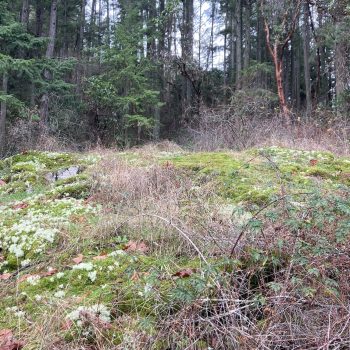
Over a few hours on a cold, bright morning, we traversed the rocky bluffs that make up the protected area, brushed through dense undergrowth and past towering Douglas firs, hemlocks, and cedars, and travelled down to the parcels of the covenant that overlook the shoreline just below Gower Point Road.
What we observed was inconsistent. In interior areas of the covenant with minimal human disturbance, the ecosystem remains largely intact, with a healthy distribution of native species. Closer to the covenant boundaries—particularly near footpaths, informal trails, roadside edges, and adjacent properties—the ecological integrity is more variable.
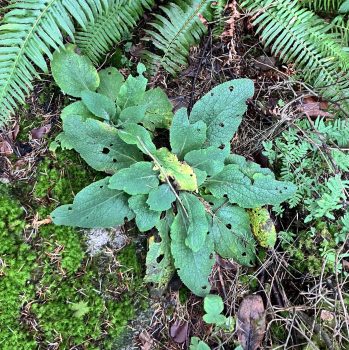
In these edge areas, we observed a noticeably higher presence of invasive plant species, including English ivy, Scotch broom, common periwinkle, and foxglove. These patterns are not unique to Gospel Rock; they reflect a well-established relationship among disturbance, habitat edges, and the spread of invasive species.
Disturbance, Edge Effects, and Invasive Species
When natural ecosystems are fragmented or altered by human activity, new ecological “edges” are created. These are known as induced edges—abrupt boundaries between intact habitat and developed or disturbed areas such as roads, trails, or buildings. Induced edges differ from natural transitions between ecosystems (ecotones) in that they tend to be abrupt rather than gradual, leading to sharp changes in light availability, wind exposure, temperature, and soil moisture.
These altered conditions tend to favour invasive species. Many invasive plants are generalists: they grow quickly, reproduce aggressively, tolerate a wide range of conditions, and lack natural predators in their new environments. Disturbed soils and fragmented habitats give them a competitive advantage over native species that evolved under more stable ecological conditions.
Once established along edges, invasive species can act as sources for continued spread into adjacent habitats. This process is often facilitated by human movement along trails and roads, wildlife vectors, and ongoing low-level disturbance that prevents native vegetation from fully re-establishing.
Research throughout the Pacific Northwest consistently shows that disturbed ecosystems exhibit higher invasive species richness and abundance, along with corresponding declines in native biodiversity and ecosystem function.
Why Monitoring and Stewardship Matter
Legal protection alone does not guarantee ecological health. Conservation covenants are powerful, but they depend on active stewardship to remain effective tools for preserving biodiversity and sensitive ecosystems. Monitoring allows us to:
- Detect invasive species early
- Track changes over time
- Understand how human use is affecting sensitive areas
- Inform appropriate management and restoration actions
At Gospel Rock, monitoring efforts have highlighted the importance of addressing disturbance along parcel edges and preventing the gradual spread of invasive species into the interior of the covenant. This is where community involvement becomes essential.
How You Can Help Keep Gospel Rock Healthy
If you love Gospel Rock and want to see this special place continue to thrive, there are practical ways to support a healthy ecosystem.
Minimize Disturbance
Reducing disturbance helps prevent the spread of invasive species and maintain ecological integrity. Small actions by many people make a real difference:
- Stay on established trails and paths
- Avoid creating or using informal shortcuts
- Respect sensitive areas and avoid trampling vegetation
- Be clear on how to prevent the transport of invasive species
Support Invasive Species Management
Where disturbance has already occurred, active and thoughtful management can help native ecosystems recover and minimize the harm caused by invasive species. Invasive species management may involve a combination of approaches, depending on the level of disturbance and species composition:
- Mechanical methods: hand-pulling, digging, pruning, and preventing seed production
- Cultural methods: replanting disturbed areas with native species
- Biological methods: using insect or disease-causing organisms to target the invasive plant without harming other non-invasive plants in the area
Community Action
Gospel Rock’s protection is the result of decades of care, advocacy, and collaboration. Its future will depend on continued attention and shared responsibility.
The SCCA is working to help re-ignite community stewardship groups around Gospel Rock, building on the love that locals have long held for this special place. Stay tuned for opportunities to get involved in invasive species management and other hands-on stewardship activities that help protect this precious and sensitive ecosystem. By staying engaged and taking part where we can, we each play a role in ensuring Gospel Rock remains healthy, resilient, and thriving for generations to come.