
The SCCA practices a cooperative model of private land conservation in which several organizations work together to care for the land.
The Islands Trust Conservancy holds property on Gambier Island; the SCCA and The Land Conservancy of British Columbia (TLC) share responsibility as legal conservation covenant holders and work in partnership with the Gambier Island Conservancy, monitoring the sites and upholding the covenant terms over time.
A conservation covenant is a legal agreement registered directly on a property’s land title; it identifies the land’s ecological values and establishes long-term restrictions to ensure those values are protected.
Learn more about what conservation covenants are and which ones the SCCA holds here.
Every year, we make the trip to Gambier Island to participate in monitoring and restoration projects that ensure these lands’ ecological values are properly maintained.
Monitoring is a core responsibility of land trusts. It involves regular site visits to observe ecological conditions, document changes over time, and identify potential threats to the values the covenant is designed to protect.
Walking the land and seeing the results of careful stewardship efforts by each group is extremely rewarding, and being surrounded by the variety of native species that thrive in these protected ecosystems is always a good reminder of why we work so hard together to protect these lands.
The SCCA also co-holds a conservation covenant here on the Sunshine Coast: the beloved Gospel Rock. Click here to learn how we are protecting and stewarding this special place, and stay tuned for a recap of our summer monitoring visit to Sandy Beach Nature Reserve on Keats Island!
A Day on Gambier
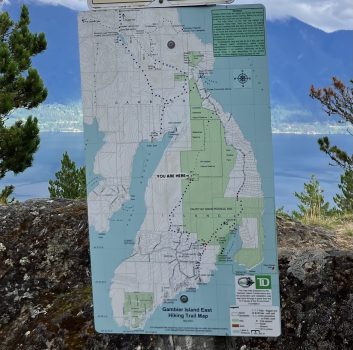
On Gambier Island, the Islands Trust Conservancy (ITC) holds three properties as nature reserves: Brigade Bay Bluffs Nature Reserve (5.14 ha), Long Bay Wetlands Nature Reserve (38 ha), and Mt. Artaban Nature Reserve (107 ha). Each of these Nature Reserves is unique in its topography, hydrology, and the diversity of life that it supports.
The SCCA and the Gambier Island Conservancy co-hold conservation covenants on these lands. Our team spent a full day in late August traversing the east side of the island where the nature reserves are located, carefully exploring and documenting the species we observed, the presence of invasives, signs of human disturbance, and the ecological integrity of each of these special places.
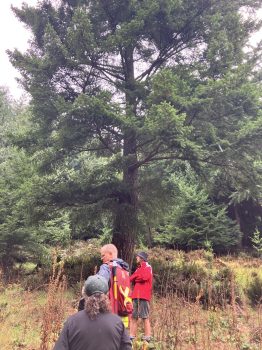
Brigade Bay Bluffs, as suggested by its name, is a relatively small reserve located on the southeast slopes of some very steep bluffs. The landscape is dominated by towering Douglas firs, Western Hemlock, Western red cedar, tall grasses, and ferns that look out over Átl’ḵa7tsem/Howe Sound. In open areas, foxglove, an invasive (and toxic!) species, has crept in from the road. Although foxglove is beautiful when it flowers, we’d prefer for it not to be present, as they compete with native plants for space, nutrients, light, and other resources.
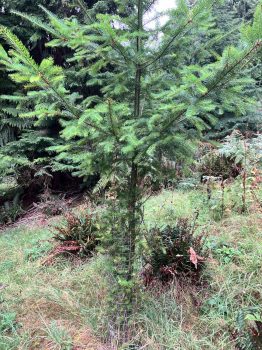
In this open area that was harvested before it became part of the nature reserve, volunteers from Gambier Island Conservancy have spent a great deal of time and effort replanting native trees such as Douglas fir and Sitka spruce. Check out a photo later in this post to see how they protect the young trees from deer that would love to munch on them.
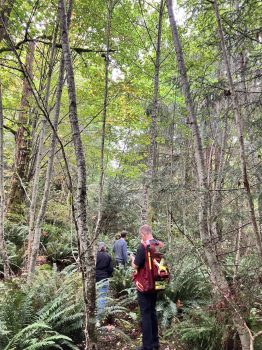
Long Bay Wetlands Nature Reserve, in contrast, covers a low-lying wetland area southwest of Brigade Bay bluffs. This shady, moisture-filled wetland is home to many Western red alder that thrive in humid areas at low elevation, as well to many conifers such as spruce and Western hemlock. Other deciduous trees and many understory plants (grasses, ferns, salal, etc.) also love this area. This nature reserve is teeming with life!
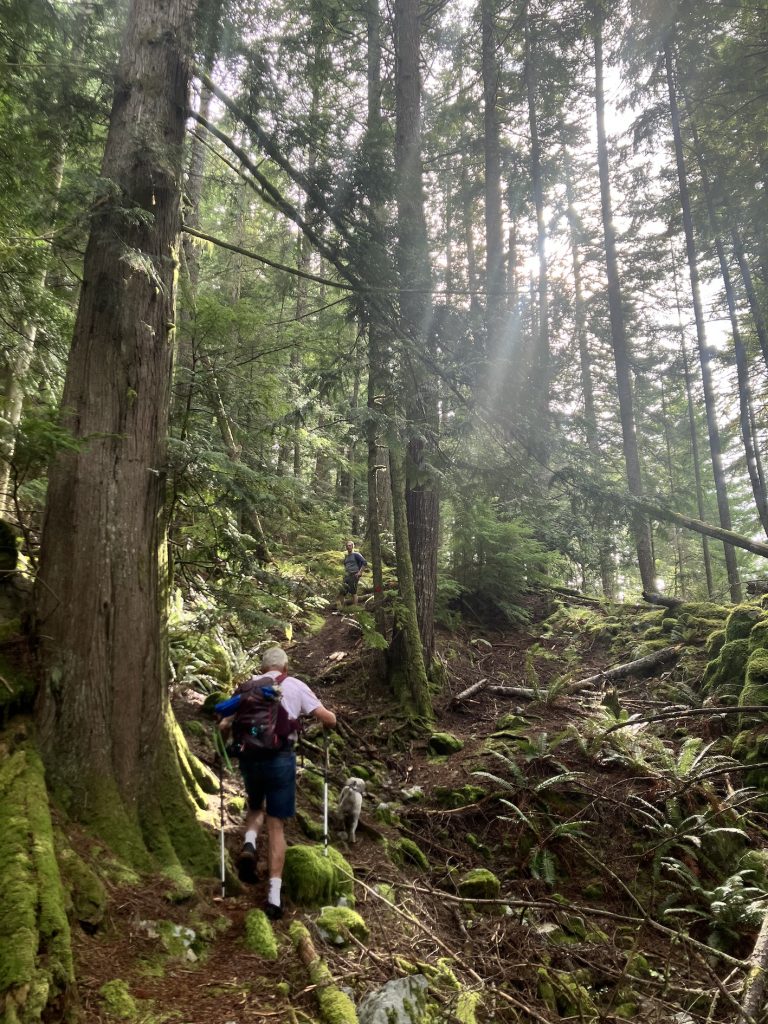
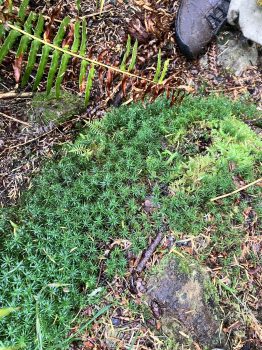
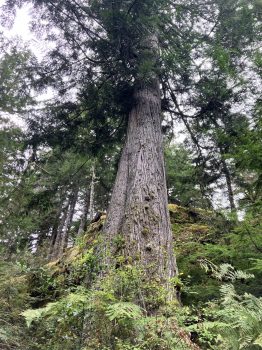
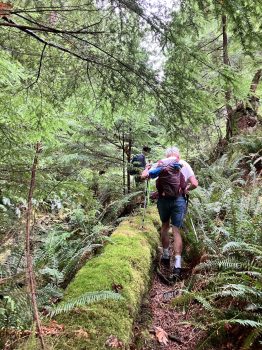
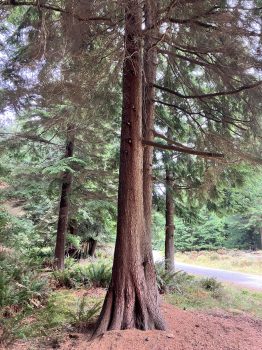
Mt. Artaban is the largest of all three nature reserves on the island, stretching from the south end of Long Bay Wetlands Nature Reserve to the summit of Mt. Artaban and covering the majority of its slopes. Its steep slopes, rocky outcroppings, and forested gullies are home to a wide variety of species; luckily for folks wanting to explore the area, Gambier Island Conservancy has built trails going up and down Mt. Artaban and placed signage for hikers. We saw some incredible old-growth Douglas firs while climbing Mt. Artaban, as well as many Western red cedar. Windfall is more common on exposed slopes where intense winds rip through Howe Sound, but downed trees add complexity to the forest floor and are essential for creating habitat.
Stewardship Activities
Often, the ‘natural, intact’ appearance of an ecosystem belies the persistent stewardship work which has gone into removing invasive species, replanting where disturbance has occurred, managing for wildfire prevention, and more. Thanks to the efforts, over decades, of many residents and dedicated volunteers on Gambier Island and Keats Island, the pristine and sensitive ecosystems of these islands remain that way.
Not only do volunteers build and maintain trails and signage so that all who visit may enjoy the nature reserves, but they also organize and lead work parties to manage the invasive species found in the nature reserves. The invasive species most commonly found (and removed) in the conservation covenants are Himalayan blackberry, holly, English ivy, and foxglove.
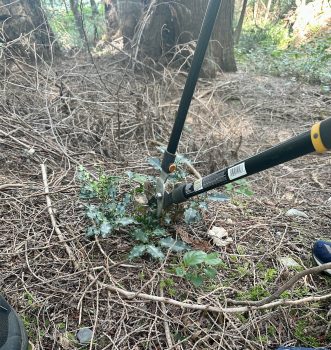
There is also hard work being done to manage forests for wildfire prevention, such as by removing ladder fuel (small trees and brush that can help a fire spread from the ground to the tree canopy). Mulching, i.e., chipping the removed limbs and scattering them back on the forest floor, is much more beneficial to the environment than burning slash piles. Mulching releases organic matter and nutrients back into the soil, helps suppress weeds and retain moisture, regulates soil temperature, and sequesters carbon in the soil.
In areas of conserved land that were previously disturbed, by fire, wind, or human activity, dedicated volunteers replant native vegetation and then monitor year over year to check how the replanted species are growing and determine when to remove trunk protection.
Thanks for following along! It’s a joy to participate in these covenant monitoring visits, to get to walk amongst complex, thriving forests, wetlands, beaches, and slopes filled with life, and to be part of the quiet, consistent work that goes into stewarding these lands. These ecosystems represent a vital yet dwindling piece of our natural and cultural heritage.
It is our hope to spread awareness of the value of conserving land and protecting our diverse and sensitive ecosystems from development. Conservation covenants come in all shapes and sizes and protect all sorts of ecosystems (you don’t need old-growth forest in your backyard for it to be home to plant and animal communities worth protecting!). If you are a landowner and want to learn about how to register a conservation covenant on your land, please visit the TLC website.