
We just wrapped up the Sunshine Coast Ocean Festival— an incredible week of live film screenings, community conversations, citizen science activities, and our in-person Celebration Day on June 14th, where the whole community gathered by the beach at Mission Point Park for ocean education, citizen science, art, music, food, and hands-on activities hosted by an amazing group of ocean champions.
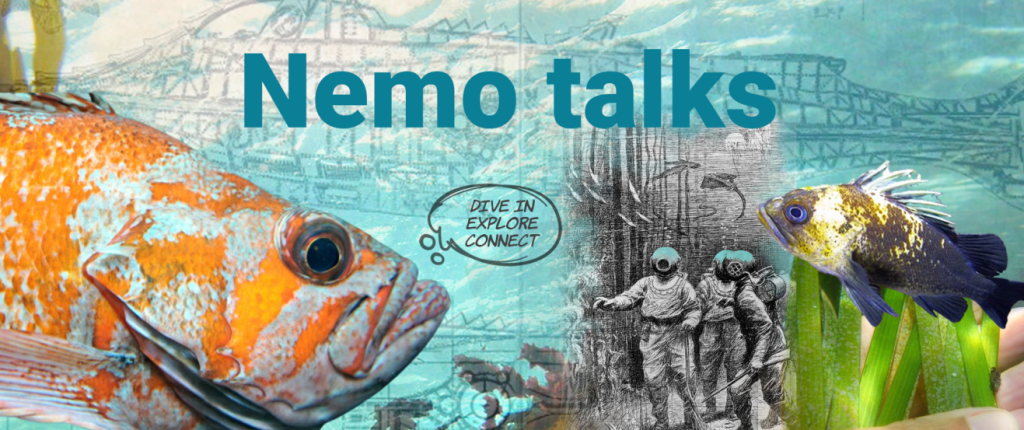
One very cool part of the Ocean Festival I look forward to every year is our NEMO Talks series: a chance to bring marine scientists and ocean stewards together over Zoom, every day of the Festival, to share their work, teach us something new about the Salish Sea and the creatures who call it home, and open up space to talk about what we can actually do with that knowledge.
On the surface, five talks on five different days, by five different speakers, spanning distinct topics, can feel like five separate stories. But participating in this year’s series, it struck me how connected they all turned out to be.
Just like the Salish Sea itself, the NEMO Talks form a mosaic: distinct pieces that, when placed together, reveal a single connected picture.
What we heard, in brief
Shelly Kemp of QENTOL, YEN W̱SÁNEĆ Marine Guardians shared how their program, rooted in W̱SÁNEĆ knowledge, integrates baseline, habitat, and compliance monitoring with culture to track and protect the critically endangered Southern Resident killer whale (KELȽOLEMEĆEN).
Chris Neufeld of LGL Limited explored the wonders and importance of canopy-forming kelp, once so abundant it was considered a nuisance but now the second most vulnerable ecosystem on the planet to climate change, just behind coral reefs.
Greig Oldford of Fisheries and Oceans Canada demonstrated how ocean-ecosystem simulations are helping scientists understand why conditions for young salmon have shifted in the Salish Sea so dramatically since the 1980s.
Councillor Benny Pierre Jr. and Gavin Joe of shíshálh Nation walked us through the remarkable breadth of shíshálh Nation’s Resource Management work: salmon hatcheries, shellfish surveys, whale salvage and ceremony, derelict vessel removal, and the Nation’s decision to remove open-net fish farms from shíshálh territory, work that is already, anecdotally, bringing whales and salmon back.
Eden Luymes of CPAWS-BC introduced us to glass sponge reefs, once thought extinct until living ones were discovered in Hecate Strait in 1987. She highlighted Marine Protected Areas (MPAs) as key to safeguarding these reefs, noting the difference between MPAs marked on a map and those that are effectively enforced and monitored.
Taken together, this year’s speakers made something clear, even if each of them said it far more gently than I will here: we are not doing enough to safeguard the health of the Salish Sea. In fact, in many ways we continue to actively harm the very creatures and ecosystems we’re talking about saving, for example:
- Glass sponges and the ancient reefs they build can be destroyed in seconds by a single pass of bottom-contact fishing gear
- Southern Resident Killer Whales are losing their primary prey, Chinook salmon, to the pressures of climate change, while the intense noise from ever-increasing vessel traffic inhibits their ability to forage and communicate
- Kelp forests face pressure from warming waters that they are not evolved to thrive in, as well as the loss of urchin predators like sea otters and sunflower sea stars, removing the checks that once kept the whole system in balance
- The slow, accumulating weight of the climate crisis is pushing water temperatures past what life here evolved to withstand
However, in recognizing how much power we’ve had to negatively impact these waters, we are reminded of how much power we have to support a thriving Salish Sea.
The Salish Sea isn’t facing a collection of separate pressures to solve one at a time; it’s one interconnected system, and so are the solutions.
Our actions, however small, ripple outward, and they are more powerful when we recognize their interconnectedness.
When you advocate for stronger MPA enforcement because you care about glass sponge reefs in Átl’ḵa7tsem/Howe Sound, you’re also building the case for the same stronger enforcement that protects Southern Resident Killer Whales in the Strait of Georgia. When you become a local observer of kelp health on a kayak or dive, you’re contributing to the same body of evidence that helps justify stronger salmon habitat protection, which is also orca habitat protection. When you support Indigenous sovereignty, and the depth of knowledge and capacity that Indigenous peoples like shíshálh Nation and QENTOL, YEN W̱SÁNEĆ Marine Guardians hold to steward these lands and waters, and you move all of us closer to a relationship with this coast that is more supportive of life than the colonial systems we’ve inherited.
None of us has to do it all, and none of these issues exist in isolation – which means none of our actions do either.
Anywhere that we focus our efforts, we generate a positive effect that ripples outward, sometimes farther than we can even fathom. Show up for the species or cause that moves you most, and the positive change you effect moves through the same web of connections that ties kelp to salmon to orcas to sponges to all of us.
Thank you!
A huge thank you to Shelly Kemp, Chris Neufeld, Greig Oldford, Benny Pierre Jr., Gavin Joe, and Eden Luymes for sharing your work, your knowledge, and your care for these waters with us this year.
And thank you to everyone who tuned in, asked thoughtful questions, and showed up for these conversations.
The Sunshine Coast Ocean Festival has come to a close, but the NEMO Talks aren’t going anywhere: all talks are recorded and posted on the Sunshine Coast Ocean Festival website. Rewatch a talk, share it with a friend, and remember that every group featured in this year’s series is doing this work all year long and appreciates your support and engagement.
See you next year!