
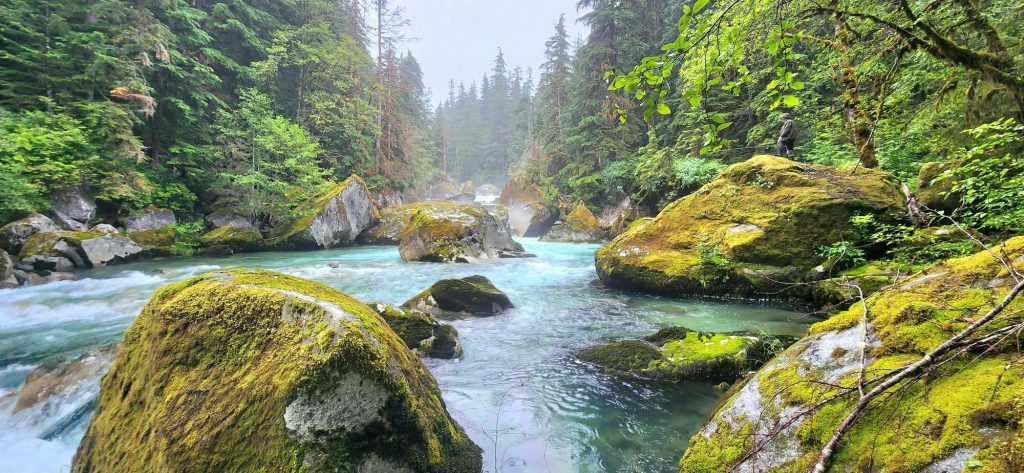
If you paddle, hike, fish, climb, care about biodiversity, or simply want special places in BC to stay wild, the Homathko River is on your ballot this month.
The provincial government has proposed changing BC’s Clean Energy Act so BC Hydro can study damming one of the most incredible, wild rivers on our coast.
Advance voting is open now through October 21, and final voting day is Saturday, October 24. Before you mark your ballot, ask your candidates one question: will you protect BC’s rivers from changes to the Clean Energy Act?
Plans for New Dams
Since 2010, the Clean Energy Act has protected some of BC’s best rivers from dams, including the Homathko, the Liard, the Iskut, the Elaho and the Peace at Site E (Clean Energy Act, Schedule 2).
On June 15, 2026, Energy Minister Adrian Dix announced that BC is seriously re-examining two of those banned projects: Site E on the Peace River and a dam complex on the Homathko River near Bute Inlet (Victoria News).
The Homathko scheme would mean up to four dams and three powerhouses, producing 500 to 900 megawatts and 3,000 to 4,500 gigawatt hours a year depending on the design (Global News). Even a technical review requires a change to the law (Victoria News). Dix said the amendment would not remove the prohibitions outright at this stage. It would open the door to study.
The government planned to bring that amendment to the legislature this fall (Energeticcity). Then the Premier called a snap election on September 22, and the fall sitting never happened. The amendment has not passed. It now lands on the desk of whoever forms the next government.
A locked door opened “just for study” is still a door opened.
What’s at stake on the Homathko
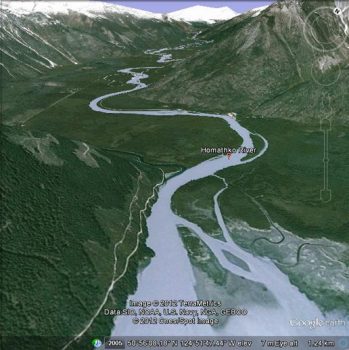
The Homathko rises in the Niut Range on the edge of the Chilcotin Plateau, flows through Tatlayoko Lake, then cuts south through the Coast Mountains and Waddington Canyon to the head of Bute Inlet. It runs 144 km, drains 5,680 square kilometres, and has never been dammed (Wikipedia). It draws expedition kayakers, anglers, mountaineers, and backcountry travellers precisely because nothing has been built.
The valley is not empty land waiting for a project. The Homathko River-Tatlayoko Protected Area covers 34,109 hectares in the watershed, and Homathko Estuary Provincial Park has protected the river mouth since 1997 (BC Parks). The province has not released a project footprint showing whether the proposed dams would overlap protected areas in the watershed (Canada’s National Observer).
This is also unstable ground. In November 2020, a landslide crashed into a glacial lake above Elliot Creek, raised a wave more than 100 metres high, and sent a flood of mud, logs, and debris 10 km down Elliot Creek into the Southgate River, which enters Bute Inlet beside the Homathko (UNBC). Big dams below retreating glaciers on steep, shifting slopes carry risks that no early-stage study has yet answered.
You cannot restore a wild river after you flood it.
Why this is bigger than one river
The Clean Energy Act’s protection only works if it is permanent. Once a government shows it will amend the Act whenever a new demand forecast arrives, every river on that list becomes negotiable.
Look at where the demand is coming from. Minister Dix tied the need for new firm power (capacity and energy guaranteed to be available 24 hours a day) to industrial growth, and said hydropower is essential to mining development (Victoria News).
On the campaign trail, the BC Conservatives have promised to double LNG production by 2032 and triple it by 2035 (Western Standard). Electrifying LNG with power from dammed wild rivers is not climate action. It is greenwashing.
There are other places to start. The province is already pursuing geothermal, biomass, and utility-scale batteries, and BC Hydro is investing more than $1 billion over three years in energy-saving programs (Victoria News; Global News). Those options do not require reopening protected rivers.
Protected has to mean protected, or it means nothing.
Consultation, not coercion
Lifting the Clean Energy Act’s protection on the Homathko affects several First Nations with overlapping territory in the watershed, and every one of them has the right to be consulted first. The Tŝilhqot’in National Government has already said the project “will not proceed without free, prior informed Tŝilhqot’in consent.” Two of the original dam sites lie in an area where the Tŝilhqot’in hold court-affirmed Aboriginal rights (EnergyNow).
The Homalco First Nation, the main proponent, says the project could fund housing, salmon recovery and community healing (Canada’s National Observer). Those are basic needs, and the province can fund them directly. Offering to lift a legal protection so a Nation can pay for basic needs by damming a river is not opportunity. It is economic coercion.
Reconciliation should not come with a megaproject attached.
Why it’s an election issue
Opening the Clean Energy Act takes a vote in the legislature. The people you elect on October 24 are the people who will cast it. That makes this one of the few environmental decisions where your ballot connects directly to the outcome.
The election also pressed pause at exactly the right moment. The amendment was announced but never tabled. A new government can bring it back early in its mandate, or drop it. Which one happens depends on what candidates hear from voters now, while they are asking for your support.
We have not yet seen any party make a clear public commitment to keep the Act closed. Silence during a campaign tends to become a green light after it.
Candidates listen hardest in the final days before a vote. Take advantage of this critical timeframe to make your voice heard.
What you can do before October 24
- Ask your candidates directly. Email them, call their campaign office, or stand up at an all-candidates meeting and ask: “Will you vote against any amendment to the Clean Energy Act that opens the Homathko, Site E or any other protected river to dam development?” A yes or no answer tells you what you need to know.
- Read the SCCA candidate Q&A to see how local candidates answered our questions on watersheds and climate.
- Vote. Advance voting runs October 16 to 21, and final voting day is Saturday, October 24. You can vote at any advance voting place in the province (CFJC Today).
- Share this post with the paddlers, anglers, hikers, climbers, and wilderness lovers in your life. The Homathko needs voices from every corner of BC.
The river can’t vote. You can.