
Climate Action
Climate change is no longer a future threat.
It is happening now.
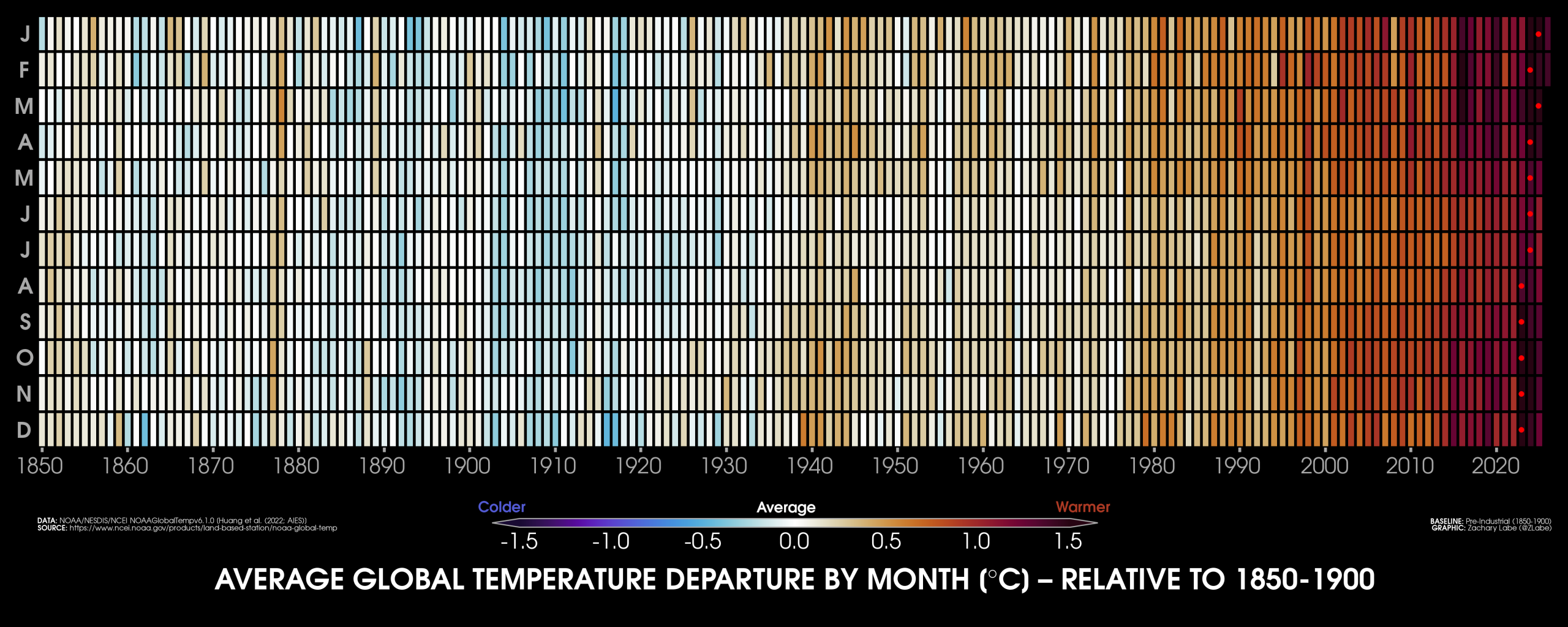
The warming trend shown above reflects the accumulation of greenhouse gases in the atmosphere from human activities, including fossil fuel combustion and land-use change.
The consequences are already being felt through worsening droughts, wildfires, floods, ocean warming, and increasing pressure on communities and ecosystems.
Climate change and biodiversity loss are inextricably linked.
As forests, wetlands, oceans, and other ecosystems are degraded, they become less able to store carbon, regulate water, and buffer communities from climate impacts.
Together, these interconnected crises increase the risk of ecological tipping points that may be difficult or impossible to reverse.
Reducing greenhouse gas emissions and protecting biodiversity must go hand in hand.
The SCCA advocates for transparent emissions accounting, science-based climate policy, strong environmental assessment processes, and decisions that align with BC's climate commitments.
In this Section
- Climate Action Home
- Stop Woodfibre LNG & FortisBC
- Community Carbon Tracker
- Forest Carbon & Climate
- Clean BC: 2025 Submission
- BC EAO Expedited EA Framework: 2026 Submission
Stop Woodfibre LNG
Woodfibre LNG and the FortisBC Eagle Mountain Pipeline threaten Howe Sound with increased tanker traffic, underwater noise, water pollution, flaring, work camps, and greenhouse gas emissions.
Working in partnership with My Sea to Sky, the SCCA is challenging project approvals, participating in regulatory processes, and advocating for a future that fights climate change and protects Howe Sound's recovering ecosystems.
Why Climate Action Matters
Climate change is the defining challenge of our time.
Communities across BC and the world are already experiencing the impacts of drought, wildfire, flooding, ocean warming, and biodiversity loss.
Despite legislated climate targets, governments continue to approve and subsidize new fossil fuel infrastructure, including LNG export projects that could lock in decades of additional greenhouse gas emissions.
The SCCA advocates for science-based climate policy, transparent emissions accounting, rigorous environmental assessments, and a transition away from fossil fuel expansion that is incompatible with a stable climate future.
Updates on Climate Action

Sunshine Coast Sue Big Oil Campaign
Over the past decade in British Columbia, climate change accelerated by fossil fuel pollution has led to wildfires, flooding, drought, and extreme heat, with disastrous consequences: destroying towns, drying up water sources, drowning thousands of acres of agricultural land, and – during the 2021 heat dome – killing hundreds of people and untold numbers of […]

IPCC Declares Climate Change ‘Code Red’
On August 9, 2021 the United Nations Intergovernmental Panel on Climate Change (IPCC) released its Climate Change 2021 Physical Science Basis report. The report describes unprecedented changes in the Earth’s climate for hundreds of thousands of years, across the global climate system. Many of these changes are unequivocally caused by humans and some, already set […]
- « Previous
- 1
- 2
- 3