
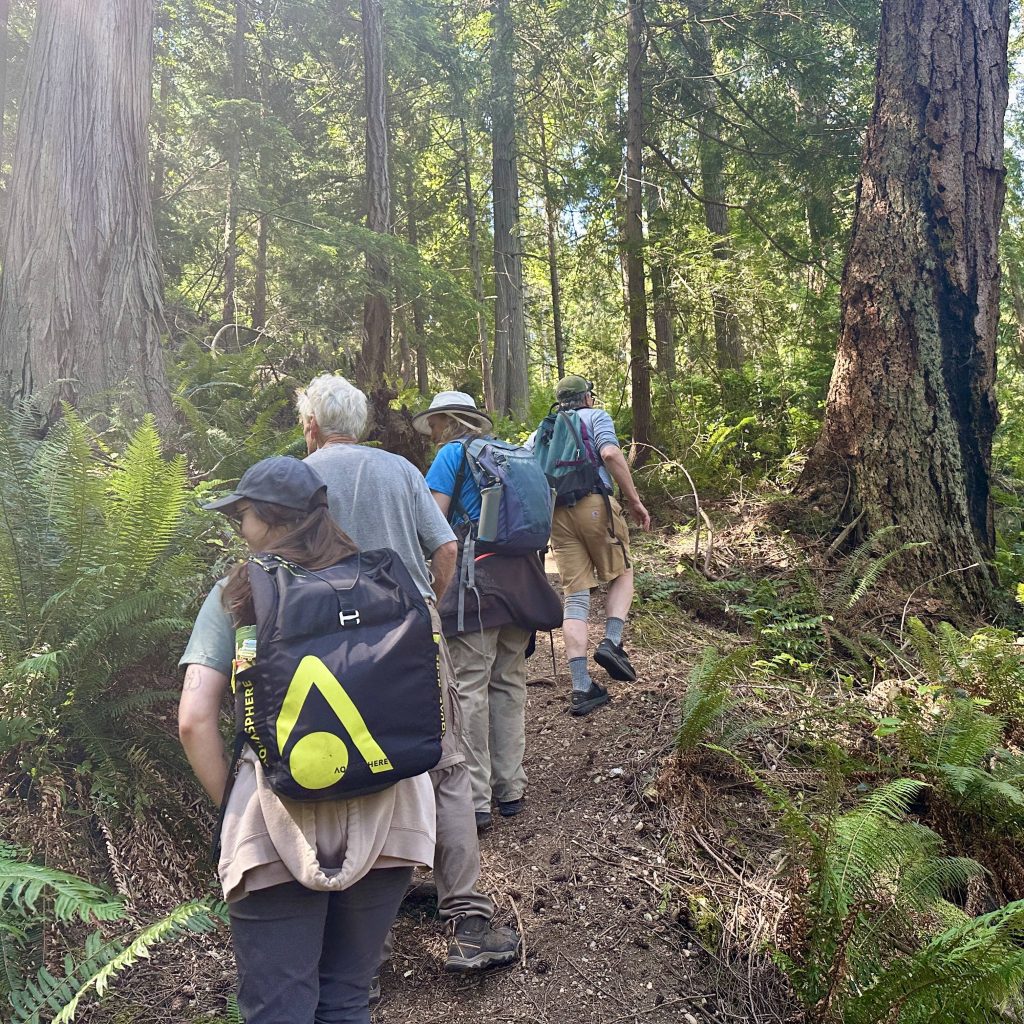
If you walk down the trail to Hoak Pus (Sandy Beach) on Lheḵ’tínes (Keats Island), it feels like one of those places that has always been the way it is — forest sloping down to the ocean, driftwood scattered along the shoreline, and the quiet sense that the land is largely intact.
The island sits within Átl’ḵa7tsem (Howe Sound), in the territory of the Sḵwx̱wú7mesh Úxwumixw (Squamish Nation), whose connections to these lands and waters stretch back since time immemorial.
Places like this often appear effortless. In reality, landscapes like Hoak Pus remain intact because people make deliberate choices to protect them.
A Community Vision for Sandy Beach
The protection of Hoak Pus- Sandy Beach reflects more than forty years of community planning and conversation about the future of this shoreline and forest. Beginning in the late 1970s, the Keats Island community, landowners, and conservation partners explored ways to ensure this area would remain protected.
Those discussions ultimately led to a land donation from the Convention of Baptist Churches of BC, which set aside this portion of the Keats Camps property so the coastal ecosystems could be conserved as a nature reserve for future generations.
Today, the Sandy Beach Nature Reserve at Hoak Pus is permanently protected through a conservation covenant held by the Sunshine Coast Conservation Association and The Land Conservancy of British Columbia, on land owned by the Islands Trust Conservancy.
Securing Protection in Perpetuity
A conservation covenant is a legal agreement registered directly on a property’s land title. It identifies the ecological values of the land and establishes long-term restrictions to ensure those values are protected.
Because the covenant is attached to the title, the protections remain in place even if ownership changes in the future.
The Sandy Beach covenant was registered under the Land Title Act in 2023, legally securing the conservation commitments for the property for the long term.
Registering the covenant is a critical step. It ensures the conservation intentions for the property are permanently embedded in the land title and provides a legal framework for monitoring and stewardship in the years ahead.
Understanding What We Are Protecting
Before the covenant could be established, the property was carefully studied so that the ecological values of the site were clearly understood.
The Baseline Assessment prepared in 2022 documents the ecological character of the land — a mature coastal forest with veteran trees that pre-date early twentieth-century logging, sensitive coastal bluff ecosystems, and shoreline habitat along Hoak Pus that provides suitable spawning conditions for forage fish such as surf smelt and Pacific sand lance. These small fish play an important role in the marine food web, supporting salmon, seabirds, and many other species in Átl’ḵa7tsem.
The baseline also records trails, shoreline features, invasive plant locations, and other elements that shape how the landscape functions.
- This documentation becomes the reference point for future monitoring. When covenant holders return to the site over the years, conditions on the ground can be compared with the baseline report to ensure the conservation intent of the covenant continues to be respected.
Stewardship on the Ground
One of the strengths of the Hoak Pus conservation model is the way several organizations work together to care for the land.
The Islands Trust Conservancy holds the property as a Nature Reserve. The Sunshine Coast Conservation Association and The Land Conservancy of British Columbia share responsibility as covenant holders, monitoring the site and upholding the terms of the covenant over time.
The Keats Island Conservation Society continues to provide hands-on stewardship — maintaining trails, removing invasive species identified in the baseline report, and helping visitors understand that this is a protected landscape.
Each role is different, but together they create a stable framework for long-term protection.
Why This Matters
Hoak Pus may not be a large protected area, but it is ecologically rich. The forest connects to surrounding intact landscapes, and the shoreline supports marine habitat that is increasingly rare along developed coasts.
Protecting places like Hoak Pus contributes to biodiversity conservation, watershed health, and climate resilience across the Sunshine Coast. It also helps safeguard the forests, shorelines, and marine ecosystems that define Átl’ḵa7tsem.
Across the region, many landowners steward forests, wetlands, and shorelines with significant ecological value. Conservation covenants are one tool that can help ensure these landscapes remain intact for future generations.
The Sunshine Coast Conservation Association works with landowners across the region who are interested in protecting the ecological values of their properties. If you own forest, shoreline, or other natural areas and are curious about conservation options such as covenants or land gifts, we welcome a conversation.
For now, Hoak Pus stands as a strong example of what thoughtful collaboration can achieve.
Science, legal protection, and community stewardship have come together here in a way that allows the land itself to remain the focus — a forest meeting the shoreline much as it has for generations.