
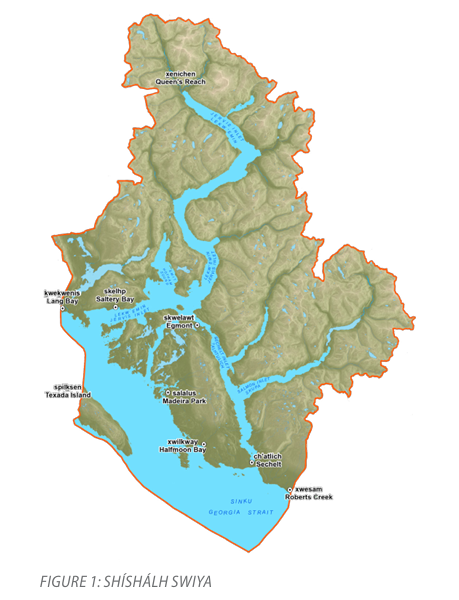
The Sunshine Coast Conservation Association (SCCA) has submitted its input to Phase 2 of the land use planning process between the shíshálh Nation and the Province of British Columbia. This collaborative process will help shape how lands and waters within the shíshálh swiya (territory) are managed into the future—balancing ecological protection, cultural values, community well-being, and economic activities.
What is the shíshálh–BC Land Use Plan?
Land use plans provide a framework for deciding where and how activities such as forestry, conservation, recreation, and development can occur. The shíshálh–BC Land Use Plan is guided by a government-to-government agreement that recognizes shíshálh governance, laws, and stewardship responsibilities, while aligning with provincial decision-making.
Phase 2 of the process focuses on assessing current ecological, cultural, and socio-economic conditions and identifying future directions. This includes reviewing the state of forests, watersheds, wildlife, and coastal environments, as well as understanding cumulative impacts from past and ongoing land uses. Public and stakeholder input—such as the SCCA’s submission—helps inform priorities and recommendations before final decisions are made.
Key Themes in the SCCA Submissions
For nearly 30 years, the SCCA has worked to conserve biodiversity and protect ecosystems across the Sunshine Coast. We participated in the land use planning process to ensure that ecological integrity, climate resilience, and community values are fully reflected in future land management decisions. In our submission, we emphasized that land-use planning is a critical opportunity to move beyond project-by-project decisions and adopt a long-term, watershed-based approach that considers cumulative effects and climate change.
1. Protecting Intact Watersheds and Forests
The SCCA highlighted the importance of conserving remaining intact watersheds and mature forests that provide drinking water, salmon habitat, carbon storage, and biodiversity. These areas are increasingly rare and play a crucial role in buffering communities from climate impacts such as floods, droughts, and landslides.
2. Addressing Cumulative Impacts
A central concern raised by the SCCA is the cumulative impact of multiple land uses—such as logging, roads, and development—on ecosystems. The submission calls for stronger assessment and management of these combined effects, particularly in sensitive watersheds and coastal areas.
3. Climate Change and Ecological Resilience
The SCCA stressed that climate change must be a core consideration in land use decisions. Protecting old forests, wetlands, and riparian areas was identified as one of the most effective and immediate ways to support climate adaptation and mitigation at a regional scale.
4. Respecting shíshálh Rights, Title, and Stewardship
The submission explicitly acknowledges shíshálh Rights and Title and supports Indigenous-led stewardship and conservation. The SCCA emphasized that reconciliation and ecological sustainability are inseparable and that land-use outcomes should reflect shíshálh cultural values, knowledge, and governance.
5. Community and Public Interest Values
The SCCA also raised the importance of public access to nature, low-impact recreation, and community involvement in stewardship. Healthy ecosystems support local economies, cultural connections, and quality of life for residents and visitors alike.
Looking Ahead
The shíshálh–BC Land Use Plan will guide decisions for decades to come. The SCCA’s submissions encourage a precautionary, science-informed approach that prioritizes long-term ecological health and cultural integrity over short-term gains.
Residents of the Sunshine Coast share an interest in how land and water are managed. Staying informed, participating in public engagement opportunities like this, and supporting local conservation efforts are all meaningful ways to contribute to a sustainable future for the region.